
Purpose:
Simulator is designed for training in conducting search and rescue operations specialists, including as an On-Scene Coordinator (OSC).
SRV Survival Craft & Search and Rescue Simulator enables the training of specialists in survival crafts, rescue boats, and fast rescue boats, including those participation in search and rescue operations, in accordance with the requirements of:
- Regulation VI/2 of the STCW Convention, Section A-VI/2 "Mandatory minimum requirements for the certification of specialists in survival craft, rescue boats and fast rescue boats", and Tables A-VI/2-1 and A-VI/2-2 of the STCW Code;
- IMO Model Course 1.23 "Proficiency in Survival Craft and Rescue Boats (other than Fast Rescue Boats)" (2024 Edition);
- IMO Model Course 1.24 "Proficiency in Fast Rescue Boats" (2024 Edition).
- launching into a rough sea and recovering,
- clearing the ship’s side,
- starting and operating engine,
- handling in prevailing and adverse weather and sea conditions, including in storm, and at night,
- steering by compass,
- towing and marshalling liferafts,
- search and rescue of survivors and persons in the sea,
- approaching to the vessel,
- applying search patterns,
- use communications with a ship and helicopter.
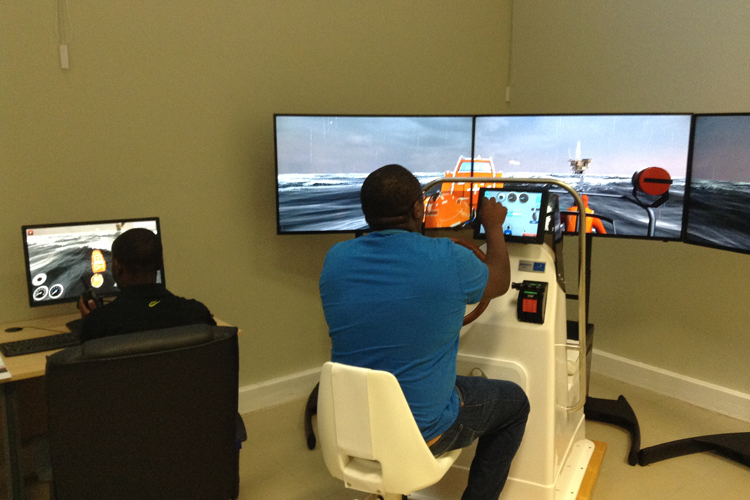
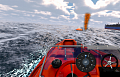
The simulator consists of an Instructor's WorkPlace and Student WorkPlaces, interacting with each other via a local network, virtually located in the same navigation area.
Instructor WorkPlace functions:
- selecting an exercise with predefined conditions, including:
- navigation area;
- environmental conditions (waves, precipitation, visibility restrictions, current, wind, cloud cover, ice, burning oil spots);
- time of day;
- placed target objects in the area, with defined movement routes and speeds.
- adjusting and saving the exercise conditions listed above;
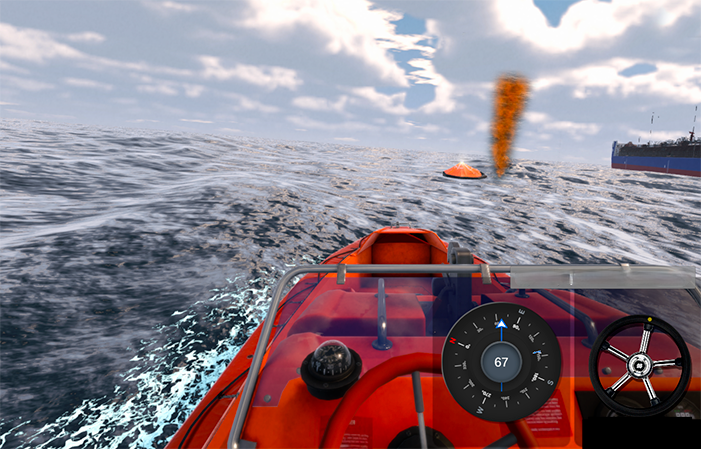
- displaying the navigation area on an electronic chart and via 3D visualization;
- assigning active survival crafts and RB/FRB to Student WorkPlaces and taking over their control;
- controlling the launching and recovery appliances of the survival craft and RB/FRB;
- introducing emergency situations;
- activation of distress signals on the liferaft.
-
setting up virtual surveillance cameras for the navigation area.
-
handling survival craft and RB/FRB, including:
- starting and operating the engine;
- using the primary steering device;
- clearing the ship’s side,
- handling in prevailing and adverse weather and sea conditions, including in storm, and at night;
- steering by compass;
- search and rescue of survivors and persons in the sea;
- towing and marshalling liferafts;
- approaching to the vessel;
- applying search patterns,
- use communications with a ship and helicopter
- launching and recovering by various methods;
- using a simulated binocular;
- using a simulated searchlight;
- activating distress signaling means;
- visual display of target objects on the water surface and the shoreline.
-
3D sound simulation of the marine environment.
-
Davit launched lifeboat,
- Free-fall lifeboat,
-
Rescue boat / Fast rescue boat.
- Rescue vessel;
- Large-tonnage vessels from which survival craft and RB/FRB are launched;
- Liferaft;
- Man overboard;
-
Helicopter.
- Open sea area.
- Sea area with a shoreline, used for beaching practice.
The simulator features models of launching and recovery appliances for launching and recovering the active boat models.
-
Launching, maneuvering, and recovery;
- Launching, maneuvering, and beaching;
- Launching, searching for survivors and persons in the sea, recovery;
- Launching, searching for and marshalling lifeboats;
- Launching, actions according to helicopter instructions, recovery;
- Exercises in ice conditions;
-
Exercises in conditions with burning oil around a distressed vessel.
-
Base version;
-
Compact version.
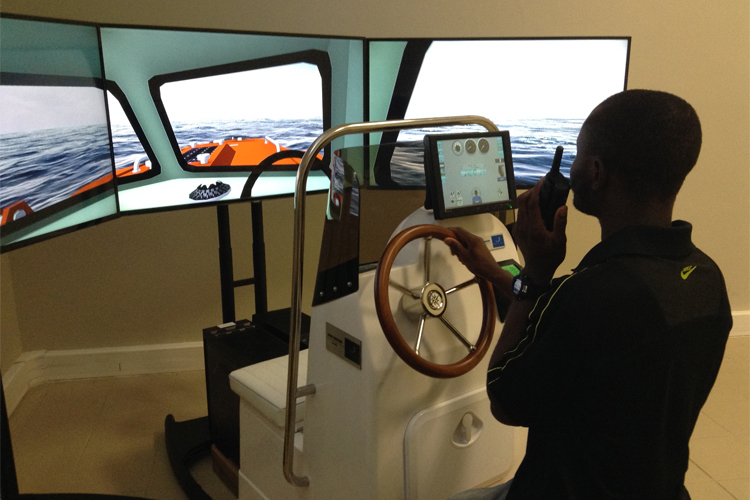
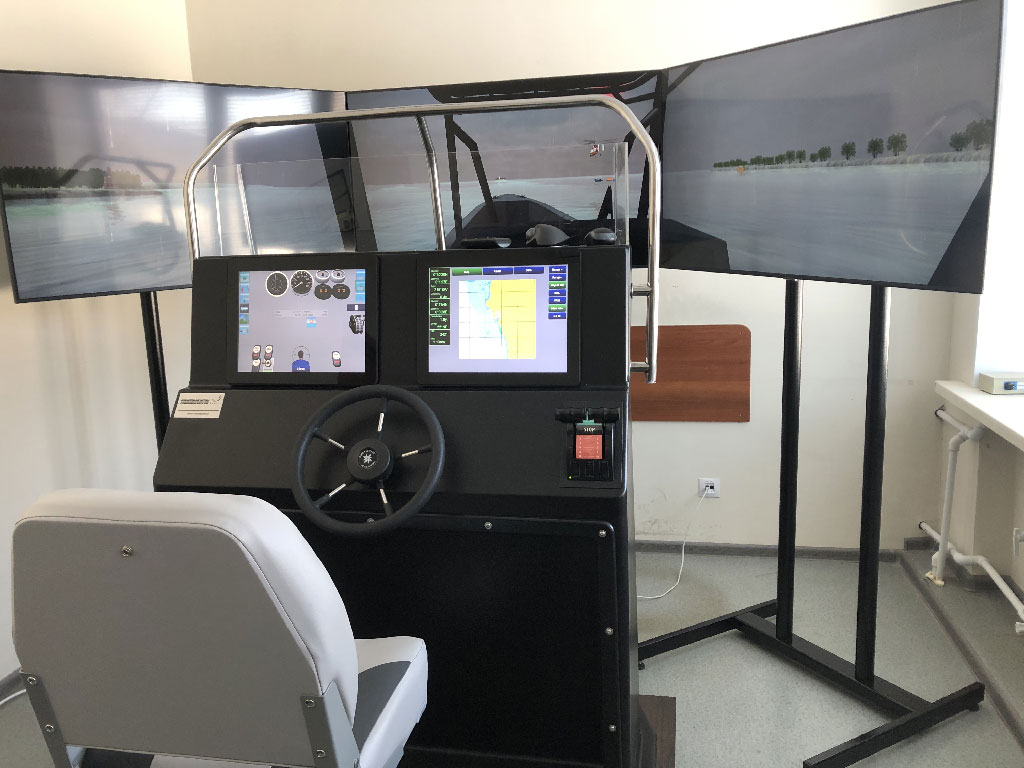
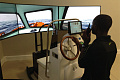
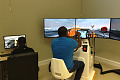
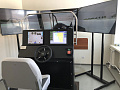
In the Base version, the survival craft’s control panel is implemented as a hardware console with a built-in steering wheel, engine throttle and touch-screen monitors. These monitors display control units of the survival craft, navigate devices and the release device. A separate student WorkPlace also includes a simulation of the navigation bridge of the vessel acting as the On-Scene Coordinator. Visualization of the surface situation is displayed on 3 LCD TVs.
The simulator is supplied with a set of technical and operational documentation, including training and guidance on practical training.
Regulations
STCW Convention:
- Regulation VI/2
- Section A-VI/2 “Mandatory minimum requirements for the issue of certificates of proficiency in survival craft, rescue boats and fast rescue boats”;
- Table A-VI/2-1
- Table A-VI/2-2
IMO Model Course 1.24 «Proficiency in Fast Rescue Boats»