
Purpose
The Free-Fall Lifeboat Simulator is designed for the training of specialists in lifeboats in accordance with the requirements and recommendations of:
- Regulation VI/2 of the STCW Convention, Section A-VI/2 "Mandatory minimum requirements for the certification of specialists in lifeboats, liferafts, rescue boats and fast rescue boats," Tables A-VI/2-1 and A-VI/2-2 of the STCW Code;
- IMO Model Course 1.23 "Proficiency in Survival Craft and Rescue Boats (other than Fast Rescue Boats)" (2024 Edition).
FFLBS-C simulator belongs to class C in the classification given in the model course and based on the DNV standard - DNV-ST-0033.
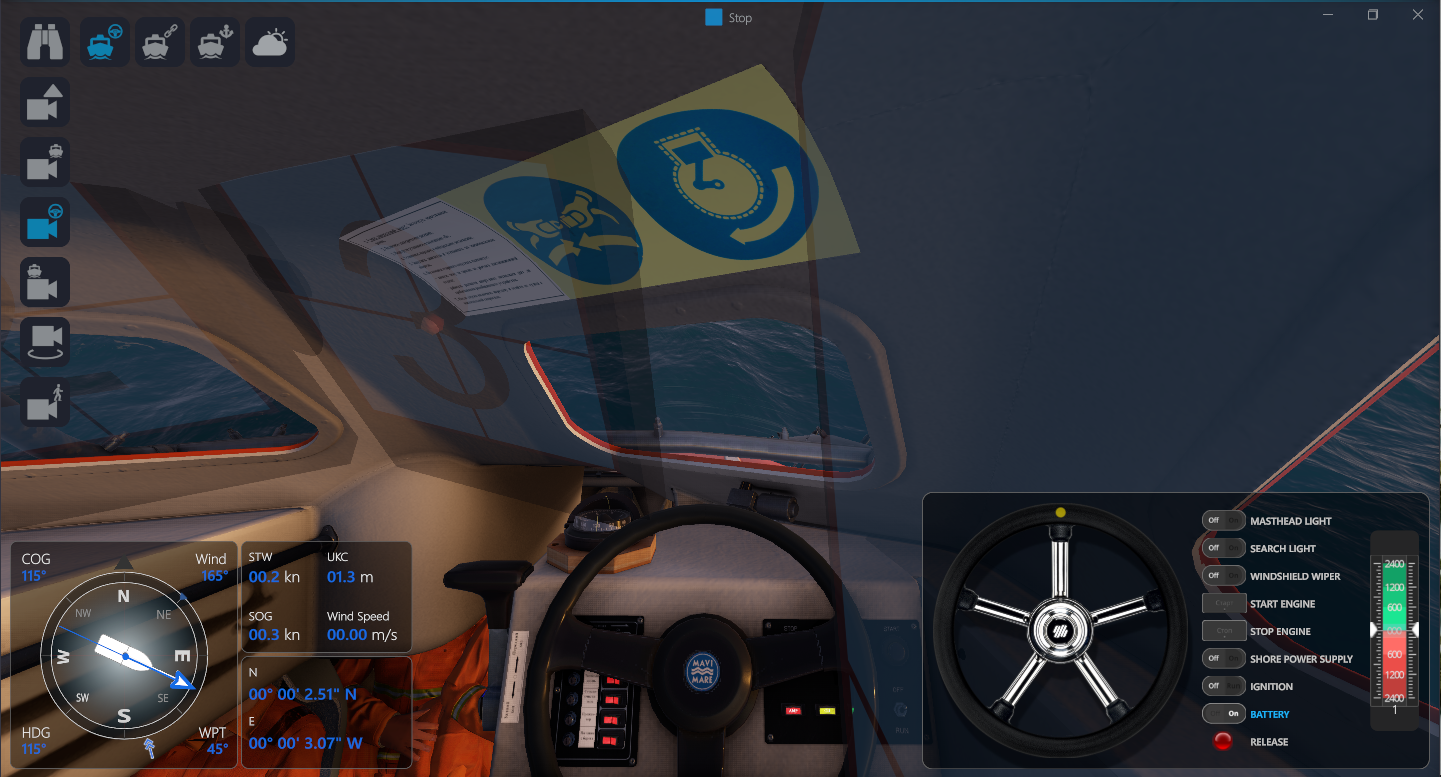
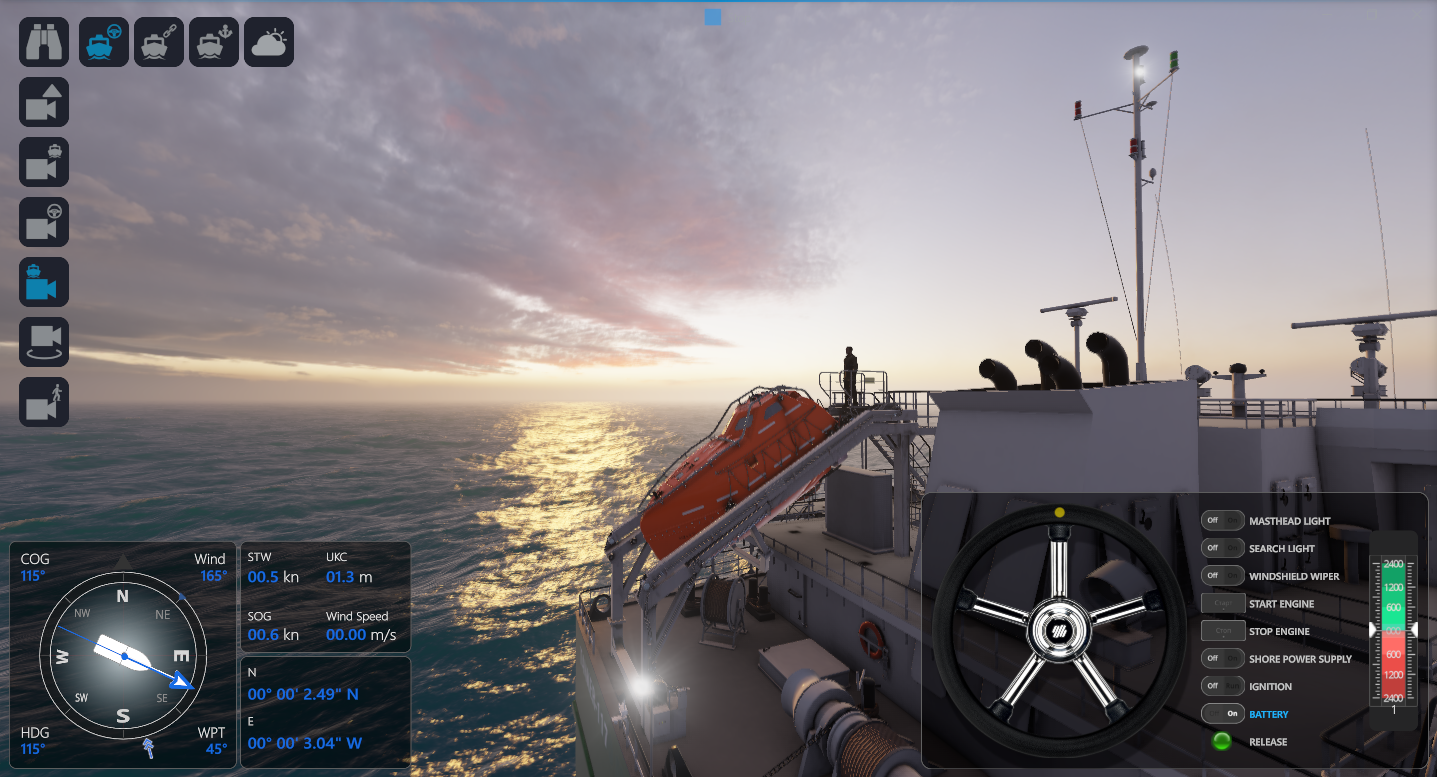
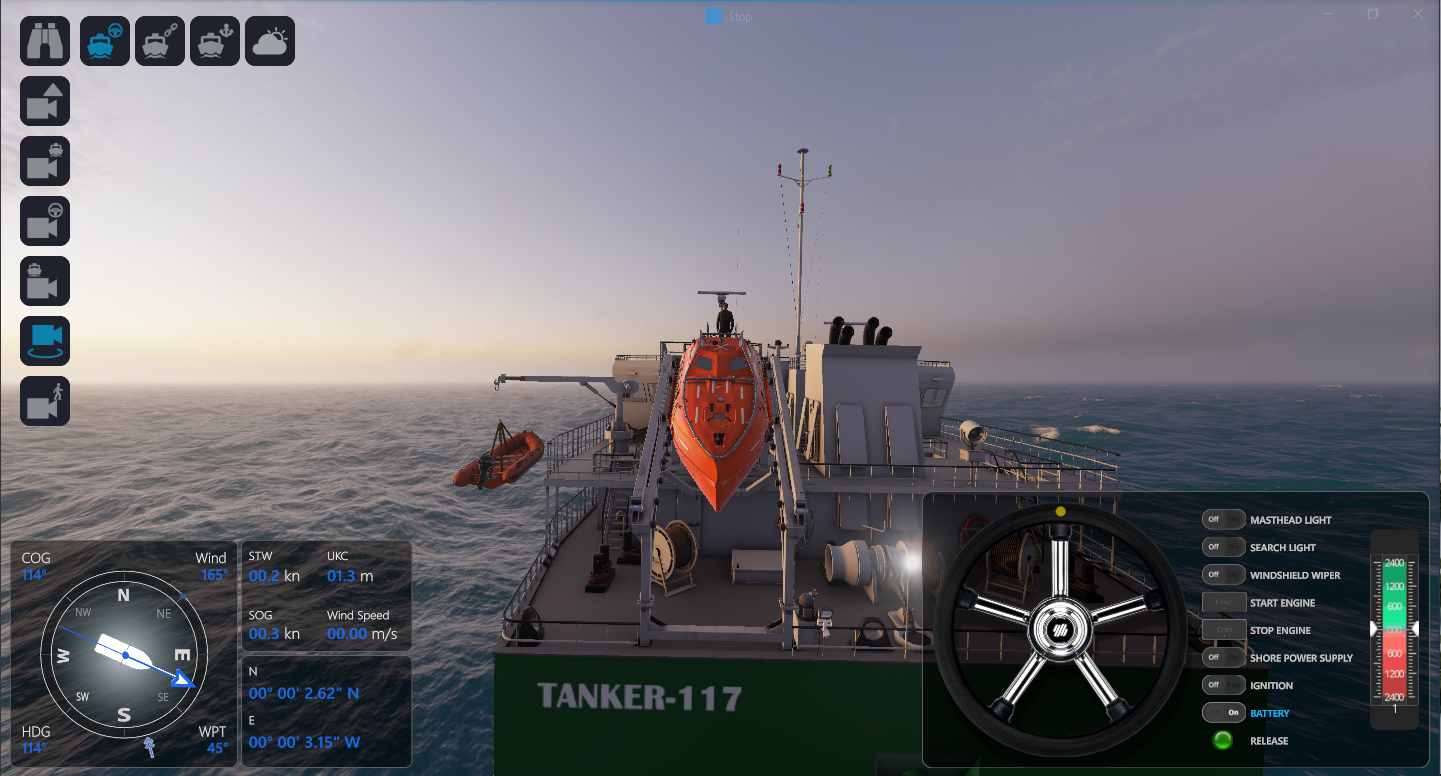
- launching the lifeboat, including in significant wave conditions;
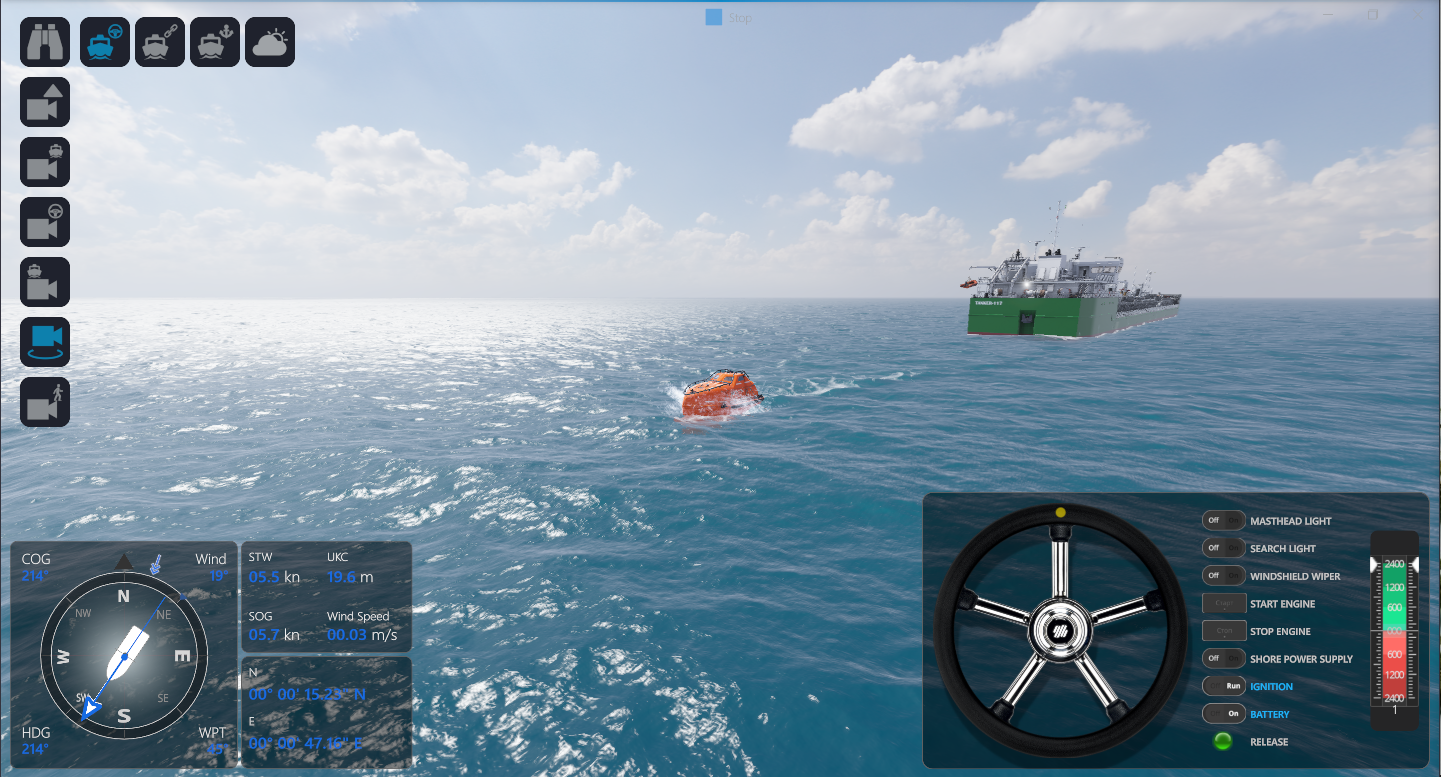
- clearing the ship;
- starting and operating the engine;
- maneuvering the lifeboat in prevailing and harsh weather and sea conditions, including in storms and at night;
- steering the lifeboat by compass;
- approaching the ship;
- embarking the lifeboat.
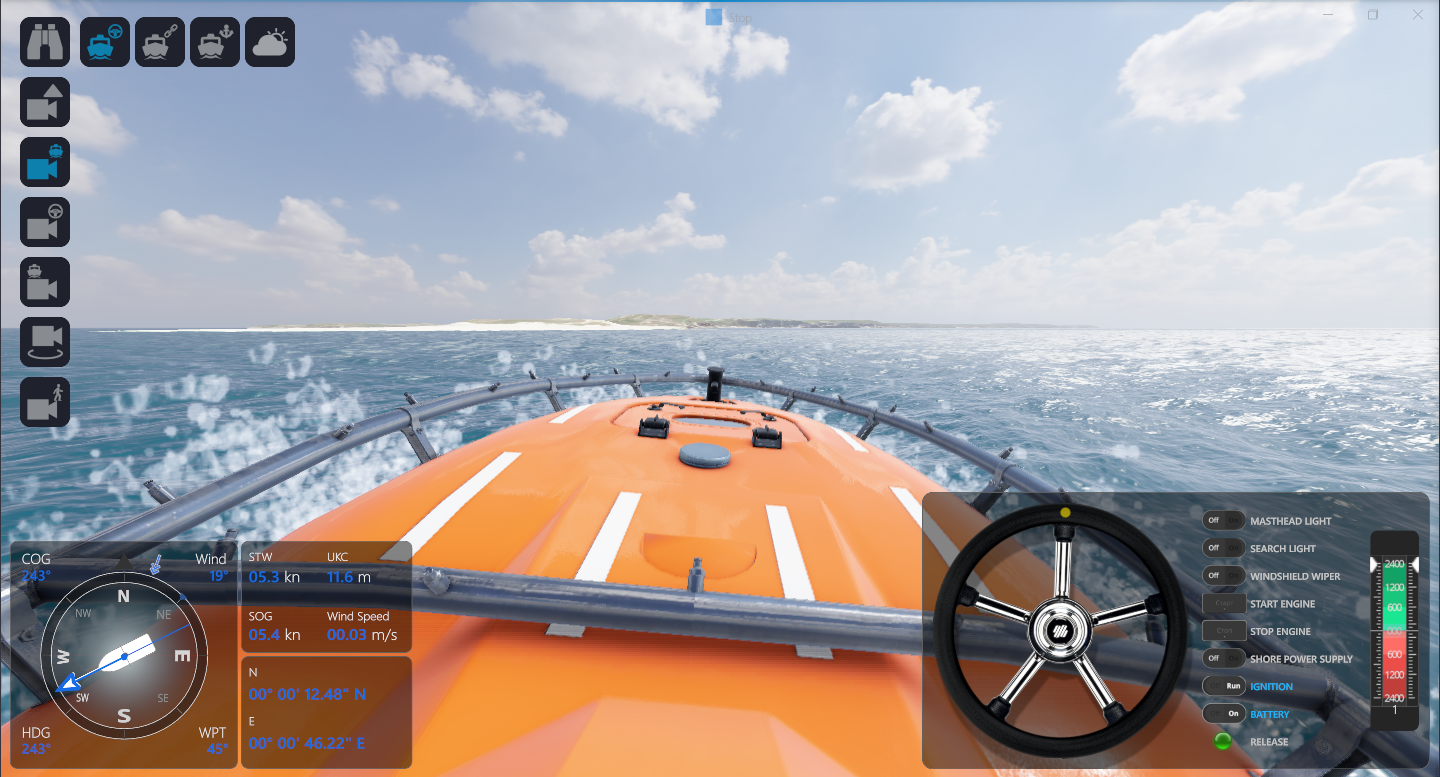
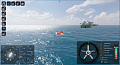
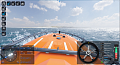
Class C simulator is a software version of a simulator in which ship control and maneuvering are carried out using a steering wheel and an engine control lever, implemented on the basis of standard manipulators. The visualization of the surface situation is displayed on the screen of one or more monitors.
- Standard game manipulators;
- Visualization system;
- Computer equipment;
- Software.
The simulator software consists of:
- Instructor WorkPlace (IWP);
- Student Workplace (SWP);
- Selection of the navigation area;
- Configuration of the surrounding environment (waves, precipitation, visibility limitations, currents, wind);
- Setting the time of day;
- Placement of target objects in the area, with specified movement trajectories and speeds;
- Introduction of emergency situations;
- Setting up virtual observation cameras for the navigation area.
Lifeboat control, including:
- Starting and operating the engine;
- Using the main steering device;
- Clearing the ship, controlling and maneuvering the lifeboat in various conditions, including storm, rough weather, and at night;
- Steering the lifeboat by compass;
- Approaching the ship;
- Intentional beaching of the lifeboat;
- Launching the lifeboat using virtual release mechanisms;
- Using a simulated binocular;
- Using a simulated searchlight;
- Visual display of target objects on the water surface and the coastline.
- 3D sound simulation of the marine environment.
Navigation Areas
The simulator implements:
- An open sea area with a vessel from which the lifeboat is launched;
- A sea area with a coastline.
Methodical guidelines for using the simulator
The simulator is supplied in the set with the guidelines for the use of the simulator, developed in accordance with the technical description and operating instructions for the fire-retardant free fall lifeboat.
Additional options
The simulator can be supplied with e-learning modules for theoretical education, multimedia training software for practice, and knowledge assessment software for testing, which are combined into training package for seafarers who are designated to take charge of lifeboats.
Regulations
STCW Convention
- Regulation VI/2
STCW Code
- Section A-VI/1
- Section A-VI/2
- Section B-I/14 “Guidance regarding the responsibilities of companies and recommended responsibilities of masters and crew members”
- Table A-VI/2-1 "Specification of the minimum standard of competence for specialists in lifeboats, liferafts and rescue boats other than fast rescue boats"
- Table A-VI/1-1 “Specification of minimum standard of competence in personal survival techniques”
IMO Model Course 1.23 "Proficiency in Survival Craft and Rescue Boats (other than Fast Rescue Boats)" (2024 Edition).
OPITO standard "Offshore Lifeboat Coxswain Training."